Table of Contents
- Project brief [Jump to this section]
- Long-term value driven by re-investment [Jump to this section]
- Repowering to meet future demand [Jump to this section]
- Capitalizing on current solar contracts and future electricity trends [Jump to this section]
- Harnessing maximum sunlight for maximum energy generation [Jump to this section]
- Strategically targeting solar assets for repowering [Jump to this section]
- Securing the repowering opportunity [Jump to this section]
- Repowering by the numbers [Jump to this section]
- Initial repowering case studies a success [Jump to this section]
- How investors can participate in the energy transition [Jump to this section]
Project brief
Renewable energy is the future of electricity generation in Canada, evidence of which is already being realized today. Coinciding with this shift in energy generation, electricity demand within Ontario is projected to increase significantly in the future. To position itself to capitalize on these developments, Skyline Clean Energy Fund has initiated a $68MM re-investment project, executed by its asset manager, Skyline Energy, to repower select operating solar assets in the Fund’s existing portfolio. The repowering initiative involves upgrading the existing equipment and expanding total system size to increase electricity generation, with the objective of enhancing revenue generation and strengthening long‑term value for Fund investors.
The asset manager identified 19 solar projects that are eligible for repowering based on the expected internal rate of return (IRR), potential value-add for investors, relevant lease provisions and landlord relationships, and post-contract value of the sustainable infrastructure once their current government-backed Feed-In-Tariff (FIT) contracts expire.
At the time of the publication of this white paper, the repowering process is underway, with projected completion expected by Q1 2028. It is anticipated that the investment of $68,066,922 into repowering could potentially add $19.5MM of accretive value for the Fund’s unitholders, generate IRRs across the assets ranging from 13-36%, and increase unit value for investors by $1.15 per unit.
While this re-investment is environmentally and financially strategic given the current state and projected future of energy generation, it also further solidifies Skyline Clean Energy Fund as part of the future of clean energy investment. Specifically, the Fund is growth-oriented and can diversify and anchor portfolios with real, tangible value-producing assets, providing long-term return potential that could help reach financial goals.
This white paper, Repowering Solar to Unlock Long-Term Value, delves into the details of the projects, including the strategies behind the selection of assets, meeting and extending current contractual obligations, generating maximum power, and securing potential value growth for investors today and into the future. It also details the first successful repowering case studies of the project and provides an overview of the projected timeline for the remaining assets.
Long-term value driven by re-investment
Skyline Energy’s solar asset management mandate is simple: effectively oversee the assets in Skyline Clean Energy Fund so that they generate maximum electricity and value for investors. Ensuring that the portfolio of assets can take advantage and benefit from technological updates and increasing power demands in order to maximize returns for unitholders is a bit more complex.
Strategic investment in Skyline Clean Energy Fund assets can help the portfolio stay ahead of the curve and position it for maximum power generation and potential earnings. Beyond acquiring new energy-producing properties or equipping other Skyline properties with renewable energy infrastructure, re-investment in the Fund’s current assets can increase overall generation capacity and revenue potential, shoring up what is already working in the portfolio and addressing and fixing any current weaknesses in the system.
Repowering to meet future demand
Beyond maximizing the amount of electricity generated by Skyline Clean Energy Fund’s assets, repowering will also position the Fund to take advantage of the expected increase in overall electricity demand. Specifically, Ontario’s Independent Electricity System Operator (IESO), is projecting that electricity demand in the province will increase 65% by 2050, taking into consideration current energy market trends, the assumed macroeconomic outlook and energy prices, and existing government programs.
Figure 1: Electricity Demand Forecast Summary
Notes: This is a projection and does not reflect year-to-year fluctuations. The Low-Demand Scenario reflects a future where electricity consumption grows gradually. The Reference Scenario is the most likely development of electricity demand. The High-Demand Scenario represents significant future electricity consumption.
Source: IESO 2026 Annual Planning Outlook: Demand Forecast Module, March 2026
The IESO expects that this future demand will be driven primarily by the manufacturing and use of electric vehicles, along with commercial data centres to support the advancement of artificial intelligence (AI), large industrial loads for new builds, industrial mining, rail transit electrification, and, to a lesser extent, higher population growth.
Figure 2: Composition of Growth Margin Components by 2050
Source: IESO 2026 Annual Planning Outlook: Demand Forecast Module, March 2026
These increased demands, along with Ontario’s goal to leverage renewables to achieve a net-zero greenhouse gas (GHG) emissions economy and a fully decarbonized grid by 2050, aligns with the asset manager’s goal to maximize the amount of renewable electricity that can be generated across the Fund’s Ontario solar assets.
Capitalizing on current solar contracts and future electricity trends
Part of Ontario’s future electricity programming includes the Local Generation Program, an initiative that will recontract existing renewable energy infrastructure with active Feed-In-Tariff (FIT) contracts approaching expiry to help support municipal clean energy commitments and address future supply concerns. A component of this program is dedicated to securing new contracts for existing solar projects sized between 100 kW and 10 MW. As each of Skyline Clean Energy Fund’s solar assets slated for repowering are backed by one of two IESO power purchase agreements, namely Feed-In-Tariff 1 (FIT 1) and Renewable Energy Standard Offer Programme (RESOP), this opportunity would allow the assets to retain bankable energy offtake agreements and provide additional value to investors by lengthening the period over which projects generate predictable, contracted, financeable cash flows.
Harnessing maximum sunlight for maximum energy generation
The IESO contracts are based on the energy generation capacity of the inverters, or the part of the solar panel equipment that turns the electricity generated by the solar panels (direct current (DC) electricity) into the type of electricity used to power our society (alternating current (AC) electricity), including household appliances and the electrical grid that supports local infrastructure.
Generally, there are times throughout the day when the amount of DC electricity generated does not hit the maximum AC electricity capacity of the inverters, which is equal to the maximum amount of electricity the system can inject onto the grid at any point in time under the IESO contract. This means that when it is cloudy, for example, the current number, wattage, and type of solar panels equipped on Skyline Clean Energy Fund’s assets are not able to generate enough DC electricity to convert into the maximum amount of AC electricity that the IESO will purchase under the contract. Repowering, or upgrading, the existing equipment (e.g., solar panels and inverters) will increase the DC electrical generating capacity of the assets and, therefore, the amount of time the system is able to achieve the maximum AC electricity output during the day, resulting in increased revenues and value for investors.
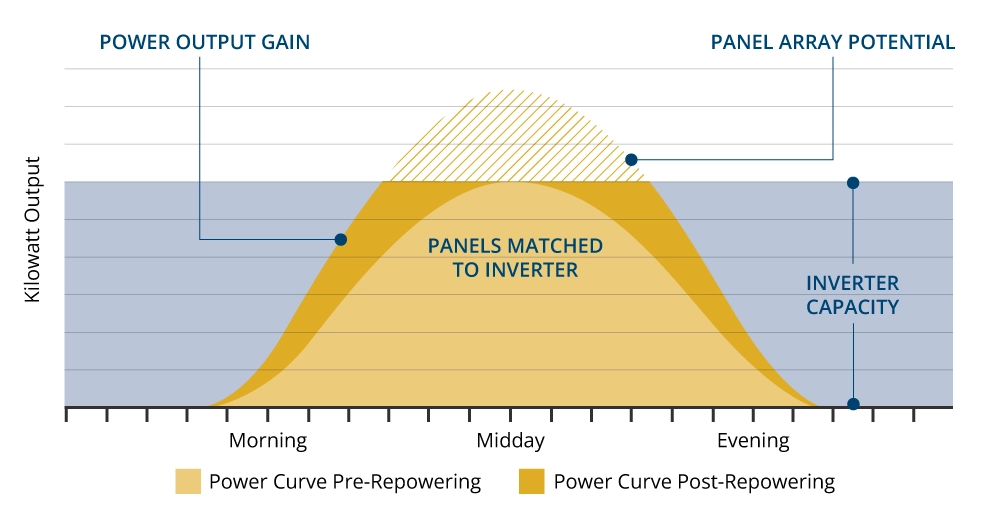
Figure 3: Pre-Repowering and Post-Repowering Solar Output Comparison
Solar power output before and after repoweringThe infographic compares solar power output from morning through evening, both before and after repowering. The infographic clearly shows that repowering increases the available power output. From morning to evening, additional kilowatt output is available. In the morning and evening, the panel array’s additional generation potential can be fully taken advantage of, as it is within the inverter capacity. Around midday, however, the panel array’s additional generation potential is above the inverter’s capacity and cannot be fully captured.
From the infographic it is clear that regardless of time of day, repowering adds a significant amount of potential electricity generation that would otherwise remain untapped.
Strategically targeting solar assets for repowering
To determine which solar assets in Skyline Clean Energy Fund’s portfolio would be ideal candidates for repowering, the asset manager considered the internal rate of return (IRR), potential value add for investors, relevant lease provisions and landlord relationships, and post-contract value of the assets once the applicable contracts have expired. After this careful review, the asset manager determined to prioritize solar projects that:
- were expected to be more lucrative for investors;
- had been underperforming for reasons beyond lack of capacity;
- have historically experienced above-average maintenance activity; and
- were located on land owned by the Fund or had lease extension options with the current landlords; or
- were located on land owned by landlords that the asset manager had good relationships with and were confident would be able to negotiate a lease extension if one was not considered in the current contract.
Beyond this initial strategy, the asset manager further determined that if there was a case where negotiating lease term extensions was not an option, value could still be generated by:
- selling the applicable equipment to other participants in the market;
- selling the equipment to the landlord in question for their own personal use; or
- removing the equipment from that property and installing it on other land owned by the Fund, as there are some properties with ample room for this type of development.
In reviewing the 84 solar assets that make up Skyline Clean Energy Fund, 19 of them were identified as being strong candidates for repowering. These 19 assets comprise over 70% of the Fund’s solar portfolio on a kW DC basis, highlighting the scope of the opportunity at hand.
Securing the repowering opportunity
As part of the strategy behind the asset manager’s repowering plan, two main risks were identified:
- Cost of supplies for the repowering, given the geopolitical climate and tariffs from the U.S.
- Legal constraints of current IESO contracts
Managing the ever-shifting geopolitical landscape
As any Canadian corporation can attest, the uncertainty around U.S. tariffs has recently been a major consideration in any initiative that involves acquiring materials. With this in mind, the asset manager committed to engaging contractors that have historically leveraged Canadian-based solar equipment distributors with diverse catalogues of parts manufactured outside of the U.S. for this repowering process. With this strategy, the asset manager is able to secure multiple non-U.S.-based equipment purchase options to purposefully avoid corporations that may be heavily impacted by tariffs. And as the repowering process continues, the asset manager will keep monitoring the political landscape to ensure that the project remains strategically protected.
Considering the legal constraints in current energy contracts
The IESO contracts that back each of the assets targeted for repowering put restrictions on the total AC electricity output, which has been contractually limited to the capacity of the inverter for that asset. Because of this, the asset manager has focused repowering efforts on increasing the capacity of the solar panels themselves, and the DC electricity they generate, instead of inverter power output.
Beyond the DC electricity capacity of the solar assets not being limited under the current IESO contracts, a recent legal precedent further confirmed that the repowering process would not be in breach of our current IESO contracts. Specifically, the ruling clarified that electricity generators like Skyline Clean Energy Fund are legally allowed to repower assets without providing notice to the IESO or receiving consent to do so as long as the alterations to the system fall within the original scope of the FIT 1 or RESOP contracts. Since the asset manager is not increasing the AC electricity capacity of any eligible rooftop or ground-mounted solar assets, nor expanding the system footprint outside of the approved engineering design of any ground-mounted solar assets, then it is free to proceed without potential penalty.
Repowering by the numbers
Of the 84 solar assets in Skyline Clean Energy Fund’s portfolio, 19 were selected for the repowering process. These include:
- 6 utility-scale ground-mounted solar projects ranging from 8.5-10.8 MW DC
- 1 smaller ground-mounted solar project at 0.3 MW DC
- 12 rooftop solar projects ranging from 0.13-2.4 MW DC
Skyline Clean Energy Fund anticipates investing a total of $68,066,922 to increase electricity generation across all 19 targeted assets from 65,264 kW DC to 106,152 kW DC. This has the potential to add an incremental $19.5MM to the value of the assets, achieve IRRs ranging between 13-36%, and increase unit values for investors by $1.15 per unit.
In Table 1: List of Skyline Clean Energy Fund Solar Assets Targeted for Repowering below, the asset manager details each of the solar projects tapped for repowering and the estimated capital requirements, estimated construction completion dates, the projected IRR, and the estimated value created by the repowering investment, along with the other considerations used to prioritize the assets.
Initial repowering case studies a success
At the time of the publication of this white paper, the asset manager has successfully completed the repowering of six assets (Falconer, Hodgson, 265 Massey, 261 Tillson, 7325 Bramalea, and 301 Tillson), and started the repowering of another seven assets, including nearing completion of the first utility-scale repowering on First Light 1. The success of these projects proves the potential of the overall repowering process, especially given the future anticipated increased energy demand and the inclusion of renewable energy in Ontario’s future electricity generation strategy.
To provide deeper insight into the first two successful repowering projects, along with expected results with First Light 1, the case studies below delve into the scope, execution of the upgrades, performance impact, and overall power generation and value increase of each asset. Click on the tiles to download each case study.
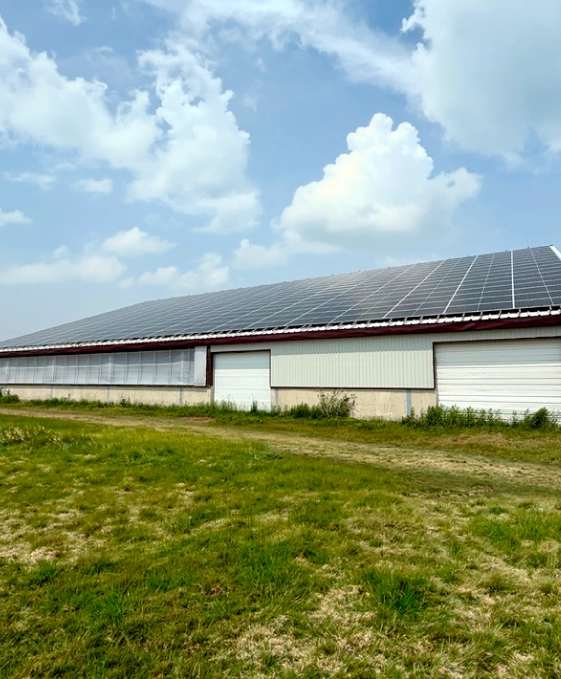 Case Study: Repowering Falconer (PDF, opens in new window)
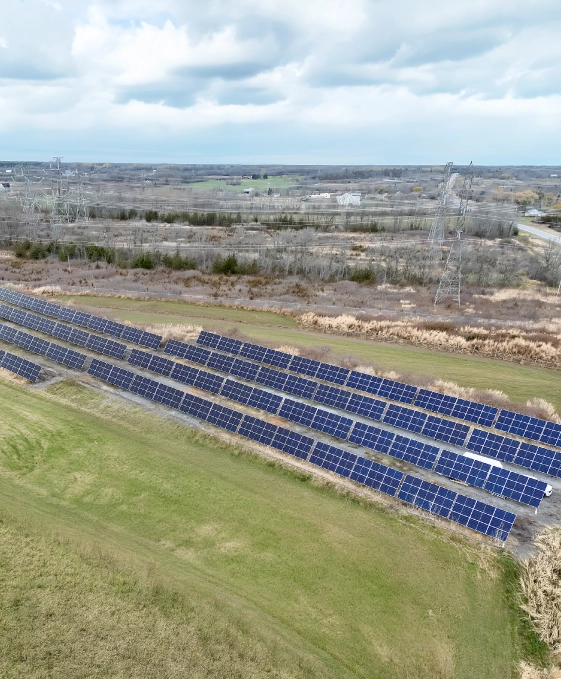 Case Study: Repowering Hodgson (PDF, opens in new window)
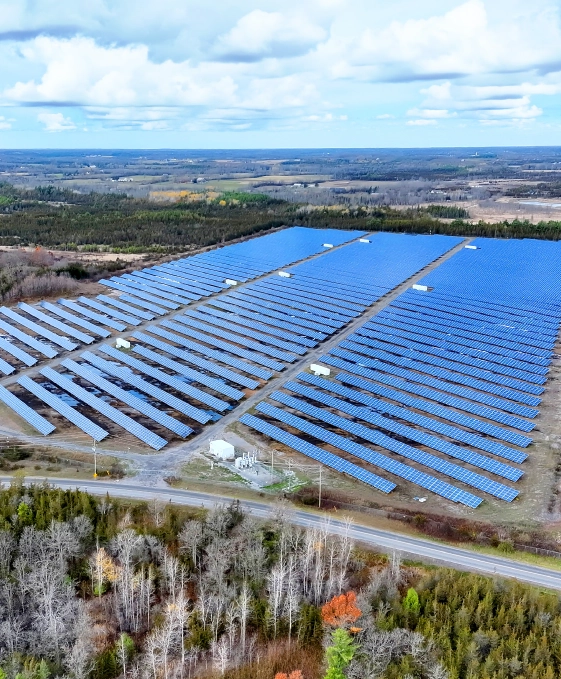 Case Study: Repowering First Light 1 (PDF, opens in new window)
How investors can participate in the energy transition
Renewable energy is not just good for the planet; it is the future of electricity generation and that future is starting now. The repowering initiative is the asset manager’s response to this energy generation shift and the overall increasing demand for electricity. By re-investing in Skyline Clean Energy Fund’s existing infrastructure, the updated solar assets can help power the future while creating potential value for investors. Skyline Clean Energy Fund and the asset manager are both looking forward to where this strategic move will take them.
Diversify your portfolio today with Skyline Clean Energy Fund so you can harness the power of re-investment, not only with the repowering process, but also by including a growth-oriented fund anchored in real assets to your holdings—all earnings from the Fund are re-invested automatically, increasing potential value for investors and helping to ensure long-term value for the future.
Skyline Clean Energy Fund is part of the future of electricity generation and clean energy investment in Canada. Join the movement and invest in tomorrow’s increased value potential, today.
| Project Name | Type | Location | Land Owned or Lease Extension | Current Size (kW AC / kW DC) | Estimate New DC Size | Total Capital Required | Estimated Construction Completion Date 1 | Estimated Internal Rate of Return (IRR) | Estimated Value Created 2 |
|---|---|---|---|---|---|---|---|---|---|
| Falconer 3 | Rooftop | Teeswater | Potential Lease Extension | 100 kW AC / 128 kW DC | 175 kW DC | $239,308 | Completed | 15.32% | $79,422 |
| Hodgson 3 | Ground Mounted | Bath | Potential Lease Extension | 250 kW AC / 299 kW DC | 489 kW DC | $569,614 | Completed | 16.99% | $266,548 |
| 265 Massey 3 | Rooftop | Guelph | No Lease Extension | 299 kW AC / 317 kW DC | 622 kW DC | $895,000 | Completed | 16.92% | $297,101 |
| 261 Tillson 3 | Rooftop | Tillsonburg | No Lease Extension | 150 kW AC / 201 kW DC | 375 kW DC | $540,000 | Completed | 16.17% | $208,975 |
| 7325 Bramalea 3 | Rooftop | Mississauga | No Lease Extension | 129 kW AC / 137 kW DC | 283 kW DC | $530,000 | Completed | 16.30% | $196,571 |
| 301 Tillson 3 | Rooftop | Tillsonburg | No Lease Extension | 250 kW AC / 399 kW DC | 625 kW DC | $775,000 | Completed | 16.14% | $303,177 |
| First Light 1 4,5 | Ground Mounted | Napanee | Land Owned | 7,500 kW AC / 9,044 kW DC | 14,884 kW DC | $8,500,000 | Q3 – 2026 | 18.12% | $2,280,856 |
| Vine Fresh 4,5 | Rooftop | Strathroy | Lease Extension | 2,000 kW AC / 2,372 kW DC | 3,588 kW DC | $2,900,000 | Q3 – 2026 | 36.24% | $3,617,905 |
| 500 Highway 4,5 | Rooftop | Tillsonburg | No Lease Extension | 500 kW AC / 848 kW DC | 1,250 kW DC | $1,300,000 | Q3 – 2026 | 16.35% | $532,421 |
| 390 Orenda 4,5 | Rooftop | Brampton | No Lease Extension | 500 kW AC / 604 kW DC | 1,225 kW DC | $1,800,000 | Q3 – 2026 | 16.22% | $674,254 |
| 280 Aviva 4,5 | Rooftop | Woodbridge | No Lease Extension | 350 kW AC / 495 kW DC | 875 kW DC | $950,000 | Q3 – 2026 | 16.10% | $386,076 |
| 256 Aviva 4,5 | Rooftop | Woodbridge | No Lease Extension | 350 kW AC / 498 kW DC | 875 kW DC | $930,000 | Q3 – 2026 | 16.25% | $382,912 |
| 1500 Victoria Street East 4,5 | Rooftop | Whitby | No Lease Extension | 200 kW AC / 298 kW DC | 545 kW DC | $720,000 | Q3 – 2026 | 16.03% | $285,638 |
| 151 Aviva 5 | Rooftop | Woodbridge | No Lease Extension | 200 kW AC / 297 kW DC | 500 kW DC | $555,000 | Q1 – 2027 | 14.01% | $165,730 |
| First Light 2 5 | Ground Mounted | Napanee | Land Owned | 8,500 kW AC / 10,496 kW DC | 13,800 kW DC | $6,613,000 | Q1 – 2027 | 12.97% | $1,363,211 |
| Ryerse 6 | Ground Mounted | Simcoe | Land Owned | 7,500 kW AC / 9,111 kW DC | 17,300 kW DC | ~$13,000,000 | Q2 – 2027 | ~14% | ~$2,000,000 |
| 13th Sideroad 6 | Ground Mounted | Simcoe | Land Owned | 8,000 kW AC / 9,468 kW DC | 16,100 kW DC | ~$12,250,000 | Q2 – 2027 | ~14% | ~$1,900,000 |
| Thunder Bay 1 6 | Ground Mounted | Thunder Bay | Lease Extension | 7,000 kW AC / 8,504 kW DC | 14,372 kW DC | ~$7,000,000 | Q4 – 2027 | ~18% | ~$2,100,000 |
| Thunder Bay 2 6 | Ground Mounted | Thunder Bay | Lease Extension | 8,900 kW AC / 10,810 kW DC | 18,269 kW DC | ~$8,000,000 | Q1 – 2028 | ~19% | ~$2,500,000 |
| Total/Average | 53,475 kW AC / 65,264 kW DC | 106,152 kW DC | ~$68,066,922 | ~$19,540,797 |
- 1 The average estimated construction period for repowering is 2-6 months, depending on the size of the system.
- 2 Estimated value created is the net present value (NPV) of the project’s incremental cash flows, net of the capital investment.
- 3 Repowering completed.
- 4 Repowering in progress.
- 5 Under contract for repowering.
- 6 Proposed assets still under evaluation, with preliminary estimates noted, which are subject to change after further investigation.